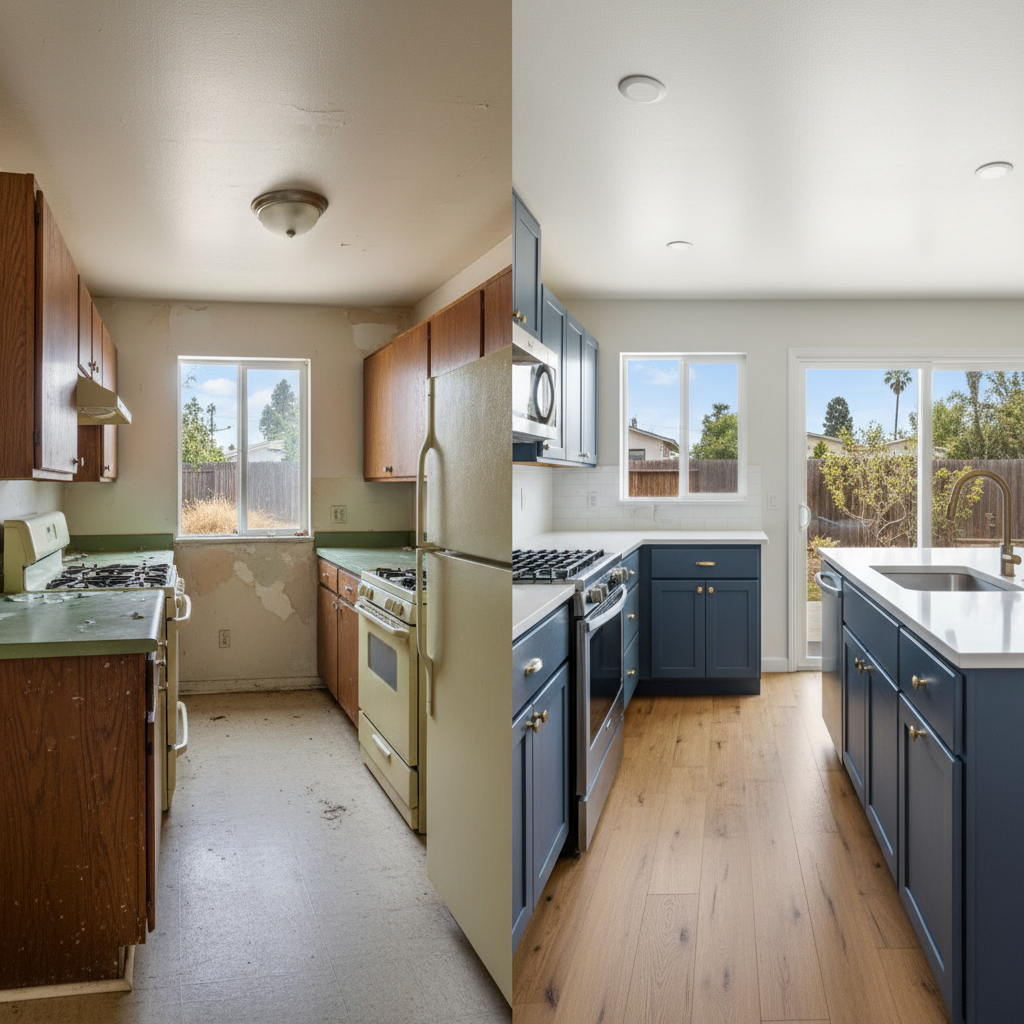
So, you're dreaming of an open-concept kitchen, huh? It's a popular request these days, and for good reason. Opening up a kitchen can totally transform a home, making it feel bigger, brighter, and more connected. But before you grab a sledgehammer, we need to talk about walls. Specifically, whether that wall you want to remove is load-bearing or not. This isn't just a technical detail; it's the difference between a relatively straightforward remodel and a major structural overhaul.
What's the Big Deal with Load-Bearing Walls?
Alright, let's get this straight. A load-bearing wall is exactly what it sounds like: it's carrying a load. This wall supports the weight of the floor or roof above it, distributing that weight down to the foundation. If you just knock one of these out without proper support, you're asking for trouble – sagging floors, cracked ceilings, and in the worst cases, structural collapse. Non-load-bearing walls, on the other hand, are just partitions. They define spaces but don't hold anything up. Think of them like interior dividers.
How do you tell the difference? Well, sometimes it's obvious, like an exterior wall or a wall running through the center of the house. Other times, it's not so clear. That's where a professional comes in. I've seen plenty of homes in Pomona, especially those older bungalows in the Lincoln Park area, where what looks like a simple partition is actually holding up a good chunk of the second story. You can't guess on this stuff; you need an experienced eye or, for absolute certainty, a structural engineer.
Option 1: Removing a Non-Load-Bearing Wall
This is the easier, less expensive route, and frankly, it's what most homeowners hope for. When you're dealing with a non-load-bearing wall, the process is pretty direct:
- Cost: This is generally the most budget-friendly option. You're looking at demolition, patching the floor and ceiling where the wall used to be, and then finishing work like painting. Depending on the wall's size and the finishes, you might be in the ballpark of a few thousand dollars up to maybe ten thousand, not counting other kitchen renovations.
- Durability: Since you're not messing with the structure, your home's durability isn't impacted at all. The new open space is just as solid as it was before.
- Maintenance: No special maintenance here. It's just an open space now.
- Appearance: You get that clean, seamless open-concept look you're after. The transition from kitchen to living or dining area is smooth and uninterrupted.
- Timeline: These projects are usually quicker. The demo and patching can often be done in a matter of days, with finishing work wrapping up shortly after.
For many homes built after the 1970s, especially tract homes, you often find more non-load-bearing walls that are easier to remove. It's a great way to update a dated layout without breaking the bank.
Option 2: Removing a Load-Bearing Wall
This is where things get more involved, and you need to be prepared for a bigger project. If that wall is holding up the house, you can't just take it out. You have to replace its structural function with something else. Usually, this means installing a beam.
- Cost: Significantly higher. You're not just taking a wall out; you're engineering and installing a new support system. This involves structural calculations, permits, potentially temporary shoring, the cost of the beam itself (which can be steel or a laminated veneer lumber, LVL), and then all the finishing work. You could be looking at anywhere from $10,000 to $30,000 or more, just for the wall removal and beam installation, depending on the span and complexity.
- Durability: When a licensed contractor like Charis Kitchen Remodelers does the job right, installing a beam maintains or even enhances your home's structural integrity. It's built to last.
- Maintenance: Once the beam is installed and finished, there's no special maintenance required. It's part of your home's permanent structure.
- Appearance: You still get that open-concept feel. The beam itself can either be completely hidden within the ceiling (a flush beam) or left exposed as a design feature. A flush beam is usually more expensive because it requires more extensive ceiling work. An exposed beam can look great in certain styles, like industrial or farmhouse, but it's a design choice.
- Timeline: Longer. Getting engineering plans, permits, ordering materials, and the actual installation and finishing takes more time. Expect weeks, not days, for this part of the project.
I've seen some older homes around the Pomona Arts Colony district with original layouts that really benefit from opening up a load-bearing wall, even with the added cost. The transformation can be dramatic and really boost property value.
My Recommendation for Pomona Homeowners
Look, if you can remove a non-load-bearing wall, that's almost always the way to go. It's less hassle, less expense, and quicker. You get the open space without the structural headache.
However, if the wall you want gone is load-bearing, don't let that stop you from getting the kitchen of your dreams. Just go into it with your eyes wide open. Understand that it's a bigger project, requires professional expertise (structural engineer, licensed contractor), and a larger budget. The key is to get a professional assessment early on. Don't assume anything. A quick consultation can save you a lot of grief and money down the road.
Ultimately, both options can give you a fantastic open kitchen. It just comes down to what's behind that drywall and how much you're willing to invest to achieve your vision. Either way, Charis Kitchen Remodelers is here to help you figure out the best path forward for your Pomona home.